
CSR Data a Must Read for every professional
CSR in India, unlike anywhere else in the world, is legally mandated—making the country a global outlier in codifying corporate accountability for social good. As a sustainability professional working on grassroots interventions—currently looking for CSR donor partners for a project to upskill Safai Karmacharis (sanitation workers) in solid waste management—I’ve often looked to India’s CSR ecosystem as both a resource and a mirror. A mirror that reflects corporate India’s evolving conscience, its commitment to sustainable development, and its ability to respond to social and environmental challenges. In this quest, I recently analyzed over a decade’s worth of state-wise and sector-wise CSR spending data—and the story it tells is powerful.
India’s unique position as the only country in the world with mandatory CSR under the Companies Act, 2013, makes this dataset especially meaningful. It is not just about how much money is spent, but where, how, and for whom. So, what is the data really telling us? My deep-dive into a decade’s worth of CSR data uncovers more than spending trends—it reveals the priorities, blind spots, and unrealized potential of corporate India’s development agenda. Let’s dig in.
📊 The Big Picture: CSR Growth, Year by Year
Over the past decade, India’s Corporate Social Responsibility (CSR) landscape has undergone a quiet yet profound transformation. What began as a compliance requirement under the Companies Act, 2013 has now evolved into a powerful catalyst for nation-building—with over ₹100,000 crore cumulatively invested by Indian corporates since 2014. Initially marked by scattered philanthropic acts, CSR is now maturing into a strategic function aligned with organizational values and national priorities. Companies are no longer merely “giving back”—they’re actively building forward.
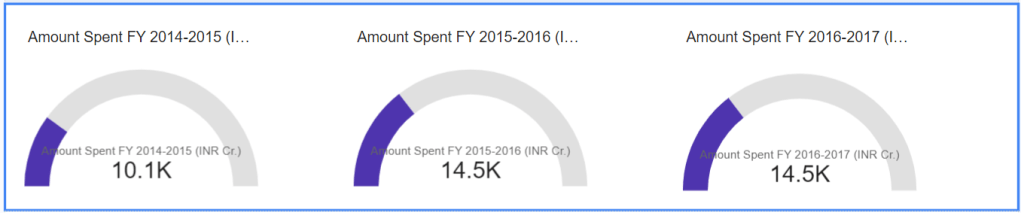
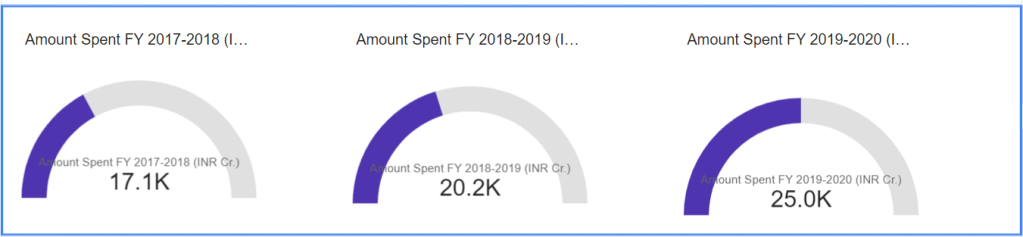
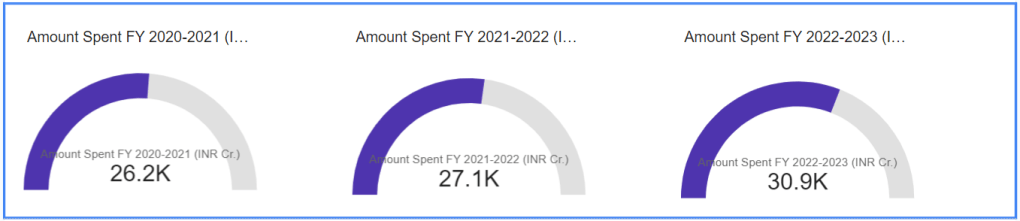
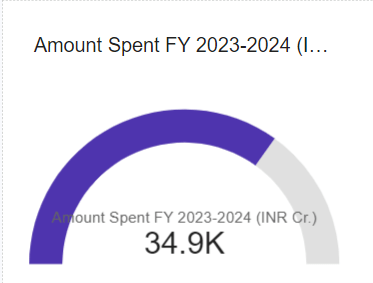
A year-on-year glance at CSR disclosures reveals a steady climb in total spending, especially post- 2017. This suggests two things: growing corporate consciousness and sharper alignment with developmental goals. Many companies have even integrated CSR directly into their Environmental, Social, and Governance (ESG) strategy frameworks.
🗺️ Mapping CSR: Where the Funds Are Going
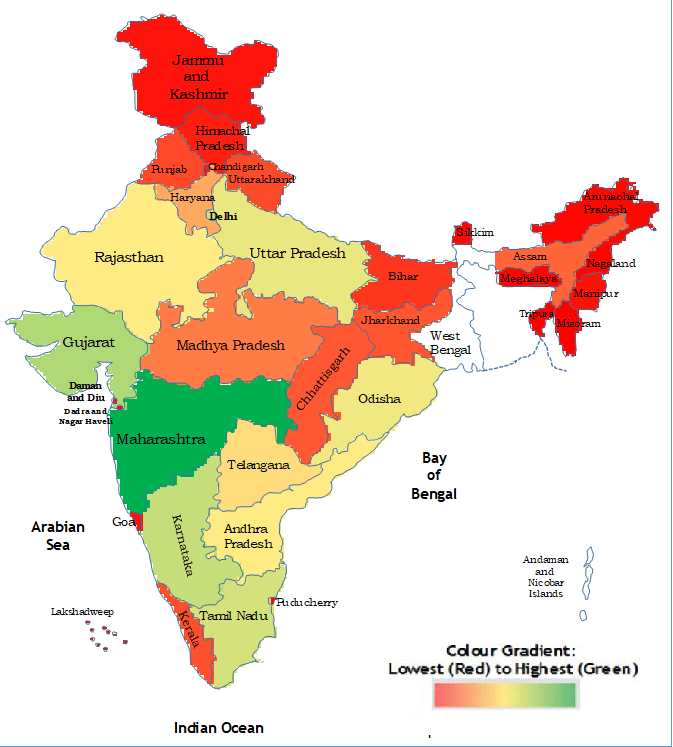
While India’s CSR journey has grown in depth and purpose, the geography of its impact tells a more uneven story. State-wise data paints a clear picture: a handful of states—Maharashtra, Gujarat, Karnataka, and Tamil Nadu—consistently dominate CSR inflows. Maharashtra alone attracts 10–15% of national CSR funds each year, largely due to its industrial and corporate density. This pattern, though not surprising, underscores a prevalent proximity bias—companies tend to invest in communities closer to their operational headquarters or supply chains. But this trend comes at a cost.
Following is the heat-map of the CSR spend in the Financial Year 2023-24.
⚖️ The Equity Gap: Who’s Being Left Behind?
Underdeveloped and aspirational districts, particularly in Jharkhand, Bihar, Chhattisgarh, Odisha, and the North-East, continue to receive disproportionately low CSR investments despite significant developmental needs. These are the very regions where strategic social investments could yield high returns in terms of impact, inclusion, and human capital development. The current geography of CSR, if left unchecked, may unintentionally reinforce regional disparities instead of closing them.
Rebalancing for Impact: A Way Forward
There’s a compelling case for decentralizing CSR flows, guided by tools like NITI Aayog’s SDG District Index. This index provides a data-backed framework to identify high-need districts and align funding with national development goals.
Forward-looking companies are already beginning to pivot:
- By co-creating with local governments in underserved areas.
- Partnering with grassroots implementation agencies that understand hyperlocal contexts.
- And adopting impact-linked funding models that reward outcomes over presence.
CSR doesn’t need to be everywhere—but it must be where it’s needed most.
🧭 Sectoral Priorities: What Corporate India Cares About
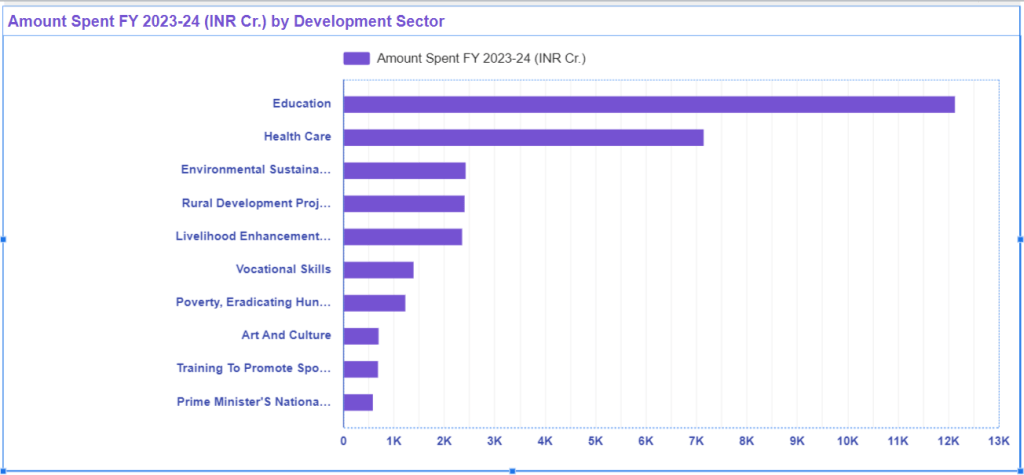
Thematic analysis of CSR spending in India confirms some expected frontrunners—and reveals some glaring blind spots. Healthcare remains the top priority, particularly in the aftermath of COVID-19. From vaccine infrastructure to telemedicine in rural areas, the health sector has seen sustained investment. Next in line is Education & Skilling, with increasing emphasis on digital access, STEM literacy, and employability. With the goal to equip India’s youth for the modern economy.
Following are the top 10 sectors which corporate India focused in financial year 2023-24.
Top Sectors of Impact
- Education: Ed-tech enablement, digital classrooms, and scholarships remain central to empowering the next generation.
- Healthcare: From funding critical care infrastructure to grassroots awareness programs, healthcare has consistently received robust support.
- Livelihood Enhancement: Whether it’s skills training for youth or entrepreneurship programs for rural women, livelihoods are emerging as a key lever for inclusive growth.
Then there’s Environment & Sustainability, steadily gaining ground due to rising climate concerns and ESG mandates. Projects include everything from urban afforestation to renewable energy pilots. But amidst all this, several critical but underfunded sectors remain neglected: Circular economy innovation, Inclusive urban infrastructure, Rights and protections for informal workers
As someone deeply engaged in developing upskilling programs for Safai Karmacharis operating in Solid Waste Management , I’ve seen this gap firsthand. Despite being the backbone of urban sanitation, these workers are largely absent in mainstream CSR strategies. Investing in the informal waste economy isn’t just a moral imperative—it’s a smart, systems-level intervention. It aligns squarely with global and national agendas:
- SDG 8: Promoting decent work and sustainable livelihoods
- SDG 11: Building inclusive, resilient urban spaces
- SDG 10: Reducing systemic inequalities
Inclusion of these sectors isn’t charity—it’s strategy. Because resilient cities cannot thrive if they exclude the very people who keep them clean, livable, and sustainable.
🌐 Aligning CSR with the SDGs: The Missed Synergy
Although India’s CSR framework isn’t formally tethered to the Sustainable Development Goals (SDGs), the thematic overlaps are unmistakable.
| SDG | CSR-Linked Activity |
|---|---|
| SDG 3 | Healthcare access, maternal health, vaccines |
| SDG 4 | School infrastructure, digital classrooms |
| SDG 6 | Clean drinking water, sanitation |
| SDG 8 | Skilling & livelihood programs |
| SDG 11 | Urban solid waste management |
| SDG 13 | Renewable energy, afforestation |
This alignment creates a massive opportunity—but few companies are capitalizing on it. Most CSR disclosures stop at output-level data, rarely linking their impact to specific SDG targets. That’s a missed chance to both amplify their efforts and contribute transparently to India’s international commitments.
These aren’t just “spends”—they’re strategic bets on India’s socio-economic future. One of the most promising trends is the growing culture of disclosure. The National CSR Portal, once underutilized, now hosts increasingly comprehensive data across sectors, states, and implementers. This openness not only builds public trust but also encourages peer learning across industries.
We’re seeing a shift from activity-based reporting to outcome-oriented measurement. It’s a signal that companies are investing in long-term impact—not just annual tallies. CSR in India is no longer a quiet checkbox exercise. It’s becoming a boardroom priority—and rightfully so. Because when corporates think beyond quarterly targets and align with the country’s developmental needs, the returns are transformative. For everyone.
📊 Recommendation: From Parallel Tracks to Strategic Integration
Imagine the potential if CSR reports came with visual SDG dashboards, allowing stakeholders to track contributions not just by sector or spend, but by development impact. This transparent, impact-linked reporting would:
- Foster greater trust with communities and investors
- Enable inter-company benchmarking for shared learning
- Help policymakers fill critical funding gaps more efficiently
In a global economy increasingly driven by impact, accountability, and values, aligning CSR strategies with the SDGs isn’t just good optics—it’s good business.
🔧 From Philanthropy to System Change: The Challenges That Remain
Despite a decade of progress and ₹100,000 crore in cumulative investments, India’s CSR framework still navigates several systemic hurdles. These aren’t just gaps—they’re signals that the next phase of CSR must evolve beyond compliance and charity.
🕳️ Impact Blind Spots: CSR reporting often celebrates the “what”—number of beneficiaries, events conducted, funds disbursed. But the “so what?” remains elusive. Without robust outcome-based evaluation frameworks, it’s difficult to determine whether these investments are delivering sustained change or merely episodic activity.
🧭 Urban-Centric Tilt: There’s a disproportionate concentration of CSR interventions in Tier 1 cities and industrial hubs. Peri-urban and rural geographies—often with the greatest development needs—remain on the margins, both in visibility and funding.
🧩 Fragmentation Over Focus: India’s CSR map is dotted with thousands of micro-projects, many lacking critical mass. Collaboration across companies and sectors is rare, leading to duplicated efforts and lost opportunities for scale. Pooled funds, collective goals, and mission-mode clusters could drive much deeper impact.
🌱 Innovation Deficit: Thematic innovation—vital for future resilience—remains limited. Concepts like the just transition, green collar jobs, and circular economy entrepreneurship are largely absent from mainstream CSR portfolios, despite their strong alignment with both ESG metrics and SDGs.
🚀 What Needs to Change: A CSR Call to Action
India has made tremendous strides in institutionalizing Corporate Social Responsibility—but now is the time to level up from policy leadership to global impact leadership. To do that, we must pivot from isolated projects to systemic transformation. This might be the roadmap forward:
✅ Rebalance Regional Allocation
Use data-backed planning tools like the SDG District Index to ensure CSR funds reach underserved geographies—not just industrial clusters.
✅ Mainstream SDG Tracking
Incorporate SDG-aligned metrics into CSR disclosure norms. Visual dashboards and outcome indicators can elevate both transparency and accountability.
✅ Center Grassroots Voices
Involve sanitation workers, Self-Help Groups (SHGs), and informal sector leaders in CSR planning processes. Those closest to the problem often hold the most grounded solutions.
✅ Form Thematic Collectives
Encourage consortiums around issues like waste management, circular economy, climate action, or rural livelihoods to achieve scale and shared learning.
✅ Promote Cross-Sector Co-Funding
Break silos by pooling CSR funds across companies, NGOs, and government schemes. This not only boosts impact per rupee spent—it also amplifies visibility and systemic reach.
🔚 Final Thoughts: Listening to the Data
India’s CSR journey is at a critical inflection point. Over the past decade, we’ve witnessed remarkable progress—from legal compliance to strategic investments aligned with national goals. But the road ahead demands more than good intentions and budgetary commitments.
The next leap will be defined not by how much corporates give, but how thoughtfully, collaboratively, and courageously they act. This means embracing CSR not just as a regulatory requirement, but as a shared responsibility—a movement that bridges business priorities with grassroots realities.
The most effective CSR today isn’t just visible in glossy annual reports—it’s felt in clean drinking water in a remote village, in a sanitation worker receiving dignified upskilling, in a schoolgirl accessing digital classrooms in an aspirational district. Impact becomes real when data meets empathy, when funding meets trust, and when purpose meets participation.
CSR must become a channel for systems thinking, not just service delivery. For that, we need bold vision backed by evidence, long-term partnerships over short-term optics, and inclusive dialogue where communities are not passive recipients, but active co-creators.
Let us remember: the strength of India’s development story will be measured not by the presence of opportunity, but by its equitable distribution. CSR has the potential to be the connective tissue that holds this promise together. In the decade ahead, the question for Indian corporates is not just “What did we fund?”—but “What did we change, and who did we change it with?”
P. S
For those interested in delving deeper into Corporate Social Responsibility and its nuances, here are some valuable resources! 📚
1. CSR Trends, Sectoral Allocation & Challenges
- CSR in India – Sector-wise Allocation, Trends & Challenges 2025
- India CSR: CSR in India – An Overview 2025
- CSR Trends to Watch in 2025 – Mettasocial
2. Regional Disparities in CSR Funding
- National CSR Portal – Ministry of Corporate Affairs
- Protean: CSR Sector-Wise Allocation & Regional Trends
3. CSR & Sanitation Workforce / Informal Sector
- ONGC’s Bandicoot Initiative for Sanitation Workers
- CSRBOX: Top 10 Sanitation & WASH Projects in India
- CSR Education: Public Health & Sanitation through CSR
4. CSR & SDG Alignment
- NITI Aayog – SDG India Index & Dashboard
- CHRMP: Aligning ESG, SDG, and CSR in India
- CSR Cares: Aligning SDGs and CSR in India
5. CSR Impact Measurement & Reporting
6. CSR Call to Action & Policy Advocacy
- Sewa International – CSR Conclave 2025
- India CSR: World Environment Day 2025 – Corporate Commitments


 CRAVIDO
Leave a comment